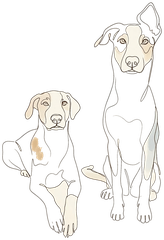
Dogs are always talking. They just don't use words. Every movement of their body, every posture, every glance says something. The question is: are we listening?
One of the most important things a dog guardian can do is learn to read their dog's body language. It changes everything in your relationship.
Why is this so important?
When we don't understand what our dog is telling us, we easily misinterpret their behaviour. We think they're "stubborn" when in reality they're scared. We think they're "doing it on purpose" when they simply feel insecure.
On the other hand, when we learn to "listen" to what the dog is saying, we can help them early, before they reach a point of reaction or stress, and we'll simply know when they're happy and what makes them feel good.
The "guilty look" doesn't mean what we think
One of the most common mistakes I see: "The dog knew they did something wrong, they looked guilty." The truth is that what we interpret as a "guilty look" is actually signs of fear and appeasement. The dog doesn't feel guilt. They're reacting to our body language, our tone of voice, the tension we're projecting.
This means that punishment "after the fact" has no educational value. The dog doesn't connect the punishment with what they did before. They simply learn to fear us.
Every dog is unique
Body language isn't always the same across all dogs. Breed, age, history, even physical structure (e.g. cropped ears or tail) can change how a dog expresses themselves.
That's why it's important to know your own dog. What is "normal" for them? What do they look like when relaxed? How does their behaviour change when they're anxious?