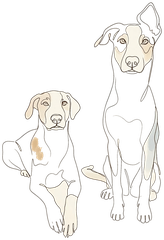
When we think about training, we often see it as exercises we teach the dog. We tell them what to do, when to do it, how to do it. But there's a part of training that we often overlook, and it's perhaps the most important: the dog's ability to choose.
What does "choice" mean for a dog?
A dog who can choose feels they have a voice. If they want to sniff this tree, we give them time. If they don't want to approach a stranger, we don't force them. If they don't want us to pet them at this moment, we respect their "no".
This doesn't mean the dog does whatever they want. It means that, within a safe framework, we give them small everyday choices.
Why is choice important?
It builds trust. When the dog understands that we listen to them and that we won't push them into something that scares them, they start to trust us. They feel that we will understand them and that we will protect them. They no longer need to react in order to handle the situation on their own. I will react for them.
It reduces anxiety. A dog who feels they have no control over what happens to them lives in constant tension. When we give them choices, we give them a sense of safety.
It builds confidence. The dog learns that their decisions matter. This helps them face new situations with more calm.
It creates real cooperation. When the dog chooses to cooperate with us, that is far stronger than obedience that comes from fear or pressure.
What does choice look like in everyday life?
At home, we give them space when they want their quiet time. When meeting other dogs or people, we observe whether they want to approach or not, and we don't push them. Instead, we give them the option to leave.
Choice is not the absence of boundaries
Giving the dog choices doesn't mean leaving them without structure. The boundaries are there, but within them there is room for their voice.